The Conversation
16 Feb 2025, 07:31 GMT+10
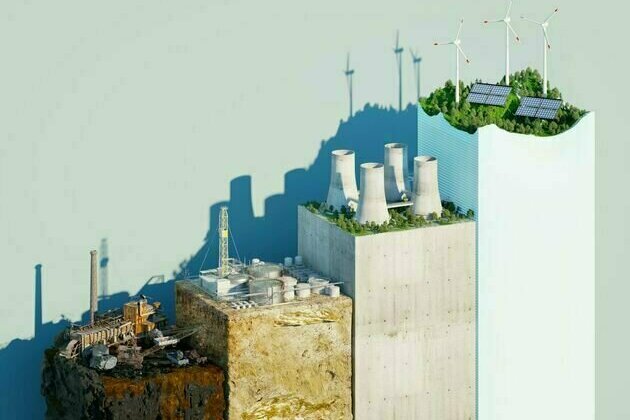
The African continent finds itself in a predicament. Advanced economies in the rest of the world developed through industrialisation: their economies transformed from mainly agricultural to industrial. This involved burning fossil fuels like coal, generating greenhouse gas emissions that caused global warming.
African economies have trailed behind industrially. They're now industrialising at a time when the world is moving away from fossil fuels and towards solar power, wind energy and hydropower.
Africa has 60% of the world's best solar resources but only 1% of the world's installed solar power systems. Despite renewable energy capacity nearly doubling in the last decade, only 2% of global investments in renewable energy went to Africa.
Green industrialisation could be the answer: achieving long-term economic growth and industrial development that does not harm the environment. But in most African countries, renewable energy is more expensive than fossil fuels, which are readily available in many parts of the continent. Africa is also one of the world's poorest regions and cannot easily afford green technologies.
So a key issue in economic development is how to stimulate green industrial productivity. Green finance (funding from banks and investors specifically for environmentally friendly projects) can fund green innovations. These include renewable energy technologies, energy-efficient building designs, or electric vehicles.
I am an economist who worked with a team of researchers to study the impact of green finance on industrialisation in Africa. We also wanted to find out if green innovation influenced the effect that green finance has on industrialisation. (This was measured in this study as the total industrial value added as a percentage of gross domestic product.)
For example, switching to renewable energy like solar power reduces greenhouse gas emissions, and helps mitigate climate change. But the high costs of renewable energy equipment could harm industrial growth.
The research analysed macroeconomic and energy, green finance and industrialisation statistics from 41 African countries between 2000 and 2020.
Our research found that green finance offers funding opportunities for clean and innovative technologies and creating new jobs in green sectors. However, the potential of green financing to drive industrialisation through green innovation (such as renewable energy projects) is not being realised.
Read more: How green innovation could be the key to growth for the UK's rural businesses
This is because renewable energy comes with high costs. There also are not enough skilled people available to run green projects. There's a lack of proper roads, connectivity or transmission lines to connect renewable energy to the main grid. The basic conditions for industrial growth through renewable energy are not in place.
Governments in Africa should find ways to make green innovation work. This will mean that society can enjoy the benefit of new environmentally friendly projects.
African governments should focus on increasing people's access to renewable energy projects. For this to happen, they need to put more funding and effort into developing renewable energy infrastructure. Renewable energy technologies must be available and affordable.
Education and capacity building is needed, particularly in rural communities. For example, community-owned solar microgrid projects provide people with the skills needed to manage and look after renewable energy systems.
Governments will need to subsidise local manufacturing of renewable energy components. When these are produced locally, this can help harness the potential of green innovation for industrialisation and also create jobs.
Countries must co-operate regionally on green innovation. This means sharing best practices, pooling resources, and making coordinated efforts towards green industrialisation.
Our research found that it would be useful to set up regional centres of excellence for renewable energy research and development. Regional alliances are also needed, so that countries can work together to negotiate better terms for green finance. This could enhance Africa's journey towards the kind of green industrialisation that is cost effective and sustainable over time.
These steps would boost the impact of green finance on industrialisation in Africa:
more climate finance, including finance from the private sector
environmental taxation - a policy tool to limit activities, goods or services that have negative environmental impacts
reform of multilateral development agencies to make it easier for African countries to access to climate funds
development bank funding tailored to the needs of African countries. Nations that invest in renewable energy manufacturing should get tax breaks and other incentives. Green bonds that only fund renewable energy projects should be issued to attract private investors
vocational training and higher education programmes that focus on training people in green technologies must get government funding.
Africa has a huge problem with trying to build some resilience to the effects of climate change, such as floods and drought. Economic development is also a challenge on the continent. Both could be addressed by green industrialisation. With the right investments in green finance, innovation and infrastructure, the continent can unlock sustainable growth, reduce poverty and help curb climate change.
Get a daily dose of Nigeria Sun news through our daily email, its complimentary and keeps you fully up to date with world and business news as well.
Publish news of your business, community or sports group, personnel appointments, major event and more by submitting a news release to Nigeria Sun.
More InformationWASHINGTON, D.C.: Parts of the U.S. and Canada may not have enough electricity this summer if hot weather causes more people to use...
DOHA, Qatar: President Donald Trump has floated the idea of a new twin-engine warplane, potentially called the F-55, along with a significant...
WASHINGTON, DC - A coalition of 29 U.S. senators, spanning both parties, introduced a resolution on Thursday calling on the Trump administration...
For decades, the US Agency for International Development (USAID) has been vital in combating HIV across the Asia–Pacific region, where...
MIAMI, Florida: Ken Griffin, the CEO of Citadel and a billionaire investor announced this week he would loan his rare first-edition...
GAZA - Israel Air Force pilots have heavily bombarded Gaza this week, killing hundreds and severely wounding hundreds more. The...
(Beirut) - Egyptian Ministry of Interior officers on April 10, 2025, apparently killed two men in northwest Egypt hours after their...
(250519) -- CAIRO, May 19, 2025 (Xinhua) -- Shakeel April (L) of South Africa vies with Fouad Zahouani of Morocco during the CAF U20...
Sharjah [UAE], May 18 (ANI/WAM): The emirate of Sharjah hosted the inaugural 2025 World Trade Centers Association (WTCA) Middle East...
(250518) -- TUNIS, May 18, 2025 (Xinhua) -- Tourists visit the Bardo National Museum in Tunis, capital of Tunisia, May 18, 2025. Museums...
(250518) -- ADDIS ABABA, May 18, 2025 (Xinhua) -- Zeleke Temesgen, commissioner of the Ethiopian Investment Commission, speaks at a...
Jaipur (Rajasthan) [India], May 18 (ANI): A Brilliant bowling performance from left-arm spinner Harpreet Brar guided the Punjab Kings...