UN Women
30 Jul 2025, 22:07 GMT+10
Social responsibility is a growing force in corporate decision making. To remain relevant, businesses know they must act on the issues that people care about, including gender equality. In 2010, for example, the Coca-Cola Company committed to economically empower five million women across its global value chain over the coming decade. Grocery giant Walmart has taken similar steps to tackle gender injustice, promoting inclusive policies throughout its retail, staffing, and supply chain operations.
These are welcome moves — but in the context of women’s empowerment and peace and security, there’s still a huge amount of work to be done.
Multinational corporations are often perceived to be “part of the problem,” Sima Bahous, Executive Director of UN Women, told Security Council members on International Women’s Day (March 8), while calling for more engagement, greater accountability, and shared responsibility. This image isn’t restricted to extractive industries and large agribusinesses, but also technology companies and social media platforms, among others.
There are a variety of ways in which private companies, knowingly or unknowingly, can exacerbate — or even profit from — conflict situations. Their supply chains may run through war-torn regions, resulting in a flow of funds, however unintentionally, to combatant groups. More directly, military equipment manufacturers, energy suppliers, and media outlets can profit by providing services to parties involved in violence. Deliberate or not, corporate activity has the power to prolong conflicts — and thus disproportionately damage the lives of women and girls.
Private sector actors do have the means to make a major difference to women’s economic inclusion in conflict and post-conflict settings, however, particularly in developing countries, where they provide 9 out of 10 jobs. Yet, regrettably, the political will isn’t always there to facilitate partnerships with private companies. Changing this requires more engagement, greater accountability, and a fresh sense of shared responsibility.
Perhaps the most difficult thing for private companies eager to advance gender equality in the peace and security space is knowing where to start. Accordingly, the Women, Peace & Security and Humanitarian Action (WPS-HA) Compact framework provides seventeen concrete measures that businesses can take immediately. These include increasing financial resources allocated to developing and enhancing women-led social and economic enterprises, supporting diverse groups of women peacebuilders by facilitating their access to digital technologies and cybersecurity tools, and promoting gender sensitive supply chains.
The latter point is of particular importance as the global economy grows ever-more interconnected. Corporate decisions made in one time-zone can have tangible consequences for communities in living another, says Jocelyn Chu, a women’s economic empowerment specialist at UN Women.
“There’s a real opportunity for companies to stay ahead of the curve, to make sure that they’re practicing the values that they stand on, which means practicing gender-responsive procurement and promoting peace and security and women’s empowerment.”
Where private sector partnerships have been established, there are evident dividends for women’s economic empowerment and, by extension, peace and security.
Since 2014, Starbucks has been funding projects in the Democratic Republic of the Congo (DRC) that support coffee farming communities decimated by decades of internecine violence. Together with the Eastern Congo Initiative (ECI), USAID, and other stakeholder groups, the Seattle-based coffee company works with farmers in the Lake Kivu region, developing their agricultural skills to increase crop yield and value. The scheme follows a simple principle: Congo’s coffee industry will only be successful if conflict is prevented — something economic security helps achieve.
Farm incomes have tripled since the intervention, allowing rural families to send their children to schools and access a higher level of healthcare. Significant steps have also been taken towards greater gender equality, including college scholarships for young women studying agriculture and more women’s leadership among the farmer cooperatives. Additionally, Starbucks is funding a DRC project from the Women’s Peace and Humanitarian Fund (WPHF), a WPS-HA Compact Signatory, that aims to empower hundreds of women as agents of conflict resolution. The company has also invested in local Congolese organizations that create jobs for disadvantaged young adults and former child soldiers in coffee growing and exporting communities.
Dell is another company taking commendable action for peace, providing technology that enables the work of grassroots humanitarian women’s groups around the world. With support from the computing giant, WPHF recently launched a secure digital platform that provides women peacebuilders with a wide range of tools and resources, including a virtual library and a capacity building portal. Most important, however, is the way in which the system brings women to come together regardless of geography, allowing them to share best practices, facilitate dialogue, and exchange ideas.
These are heartening examples — but more needs to be done, says Ghita El Khyari, head of the WPHF Secretariat. Over 80% of CSOs surveyed by the Fund last year feel that they are at risk of closure due to a lack of resources. To address this, private sector actors must be more “intentional” in their actions.
“It can go from financing instruments that are accessible to women in crisis-affected countries, to being more targeted in their recruitment of women in crisis areas, to prioritizing women-led businesses in conflict-affected areas during the procurement process; if they want to be inclusive, they need to be intentional,” El Khyari says.
It’s a message that should resonate with all socially-conscious corporations. They have the financial power and advocacy clout to help forge a more gender-equal and peaceful world. Now’s the time to use it.
Get a daily dose of Nigeria Sun news through our daily email, its complimentary and keeps you fully up to date with world and business news as well.
Publish news of your business, community or sports group, personnel appointments, major event and more by submitting a news release to Nigeria Sun.
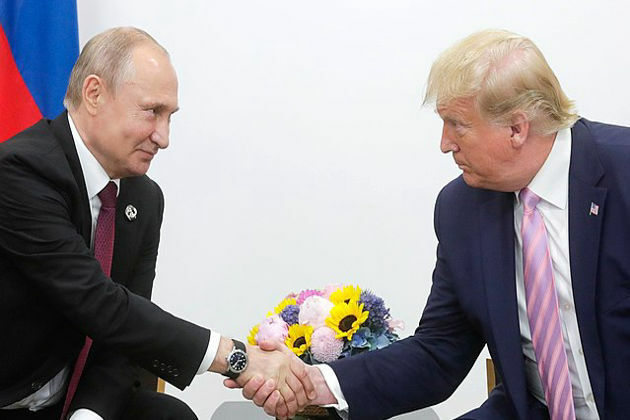
More InformationWASHINGTON DC: U.S. President Donald Trump has dramatically reduced the timeline he's giving Russian President Vladimir Putin to halt...
GOALPARA, India: In the northeastern Indian state of Assam, near the border with Bangladesh, hundreds of Muslim families now live under...
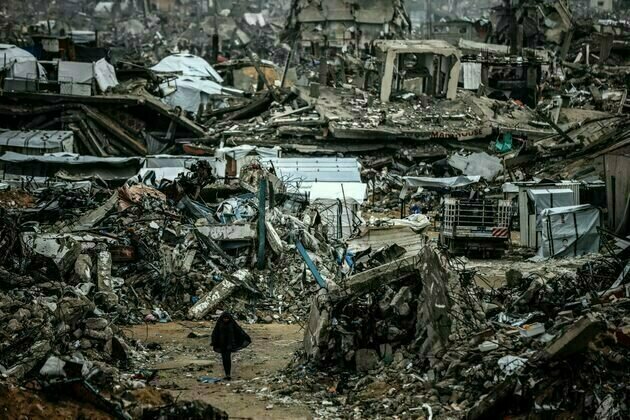
GAZA – The Palestinian Ministry of Health reported on Tuesday that the death toll in Gaza has surpassed 60,000 since the outbreak of...
MUNICH, Germany: A passenger train derailed in southwestern Germany on July 27, leaving three people dead and more than 40 injured,...
WASHINGTON, D.C.: As political and public scrutiny over Jeffrey Epstein's past continues to engulf President Donald Trump and Congress,...
KYIV, Ukraine: In late September 2022, during a crucial phase of Ukraine's counteroffensive to reclaim territory from Russian forces,...
GENEVA, Switzerland: Health authorities are facing a resurgence of the mosquito-borne chikungunya virus, with new outbreaks emerging...
A sense of shared responsibility Social responsibility is a growing force in corporate decision making. To remain relevant,...
New Delhi [India], July 30 (ANI): Biju Janata Dal (BJD) MP Sasmit Patra on Wednesday praised India's strong response during Operation...
Birmingham [UK], July 30 (ANI): Indian Champions have pulled out of their World Championship of Legends (WCL) semifinal clash against...
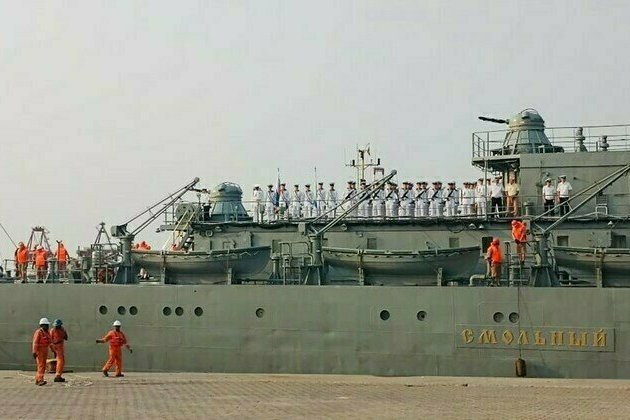
Local and Russian officials have held talks on maritime cooperation at the port of Pointe-Noire, Congo ...
Local and Russian officials have held talks on maritime cooperation at the port of Pointe-Noire, Congo A Russian naval training ship...