RT.com
15 Aug 2025, 16:01 GMT+10
Putin-Trump meeting recalls the stakes of German reunification
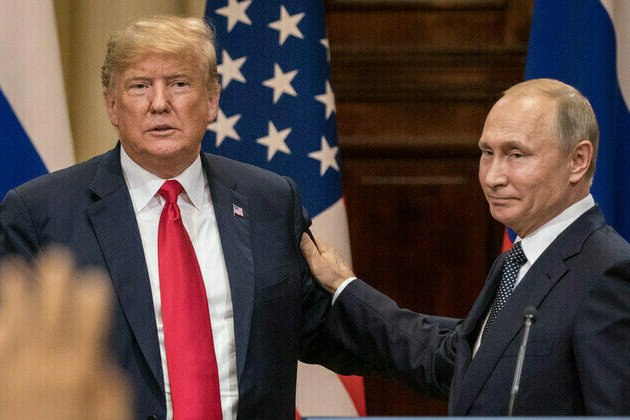
It has been a long time since a diplomatic event drew as much global attention as Friday's meeting between the Russian and US presidents in Alaska. In terms of its significance for the international balance, it is comparable only to the negotiations on German reunification 35 years ago. That process laid the foundations for political developments in the decades that followed. The Alaska talks could prove a similar milestone - not just for the Ukraine conflict, but for the principles on which a broader settlement between the world's leading powers might be reached.
Ukraine has become the most visible arena for historical shifts that go far beyond its borders. But if the German analogy holds, no one should expect a breakthrough from a single meeting. The marathon of high-level diplomacy in 1990 lasted many months, and the mood then was far less acute and far more optimistic than today.
The dense fog of leaks and speculation surrounding Alaska underlines its importance. Much of this "white noise" comes from two sources: commentators eager to sound informed, and political actors seeking to shape public opinion. In reality, the substantive preparation for the talks appears to have little to do with the propaganda framing. This is why official announcements so often catch outside observers by surprise.
That may be a good sign. In recent decades, especially in Europe, diplomacy has often been accompanied by a steady drip of confidential details to the press - a habit that may serve tactical purposes but rarely produces lasting results. In this case, it is better to wait for the outcome, or the lack of one, without giving in to the temptation to guess what will happen behind closed doors.
There is also a broader backdrop that cannot be ignored: the shifts in the global order catalyzed by the Ukraine crisis, though not caused by it. For years, I have been skeptical of claims that the world is dividing neatly into two opposing camps - "the West" versus "the rest." Economic interdependence remains too deep for even sharp political and military conflicts to sever ties entirely. Yet contradictions between these blocs are growing, and they are increasingly material rather than ideological.
A key trigger was US President Donald Trump's recent attempt to pressure the largest states of the so-called "global majority" - China, India, Brazil, and South Africa - to fall in line with Washington's instructions. The old liberal order promised universality and some benefits to participants. Now, purely American mercantile interests dominate.
As before, Washington dresses its demands in political justifications - criticizing Brazil and South Africa over their treatment of the opposition, or attacking India and China over their ties with Moscow. But the inconsistencies are obvious. Trump, unlike his predecessors, prefers tariffs to sanctions. Tariffs are an explicitly economic tool, but they are now being wielded for political ends.
The attempt has failed to produce the outcome the White House wanted. The US president is used to allies compromising to preserve their relationship with Washington. BRICS countries, too, have often avoided confrontation for the sake of their own economic interests. But the bluntness of the American push this time forced them to stiffen their positions.
Ukraine, in itself, has little to do with this shift - but it is the issue commanding global political attention. Ahead of the Alaska summit, Russian President Vladimir Putin has been personally briefing BRICS and other key partners on the preparations. They are taking note, and in many cases expressing support for the process.
Across the Atlantic, consultations are equally intense, though marked by unease and limited trust. Western Europe's anxiety that Trump might "cut a deal" with Putin is telling. The world is still dividing into groups, but while one group is moving towards greater coordination, the other is growing less cohesive.
Even if Alaska produces serious discussions, there is no guarantee it will deliver peace. It may not even be the final meeting. What is troubling is that the public debate remains focused on territorial carve-ups - who gets what, and what is given in exchange. This misses the core issue. The acute phase of the Ukraine crisis was not triggered by a hunger for territorial expansion. It began when Moscow challenged the security order that emerged after the Cold War - an order built on the open-ended enlargement of NATO as the supposed guarantor of European stability.
This is where the German reunification analogy returns. That plan, while it resolved a territorial question, also enshrined the political principles that shaped the post-Cold War system. Those same principles, and the imbalance they created between Moscow and Washington, lay at the root of the 2022 escalation. Borders and territories are only part of the picture. The real question is the basis for peaceful coexistence going forward.
In 1990, a settlement between East and West created the architecture of European security. But the way the Cold War ended - and the failure to give Moscow an equal stake - planted the seeds of today's confrontation. In that sense, the Alaska meeting is an attempt to resolve unfinished business from the past. Without a final settlement of this historic imbalance, it will be impossible to create a stable new system of relations, not just between Russia and the West but globally.
The frequency of Putin's meetings with BRICS leaders shows that Moscow understands this reality. Whether Washington does remains to be seen.
This article was first published in the newspaperRossiyskaya Gazetaand was translated and edited by the RT team
(RT.com)
Get a daily dose of Nigeria Sun news through our daily email, its complimentary and keeps you fully up to date with world and business news as well.
Publish news of your business, community or sports group, personnel appointments, major event and more by submitting a news release to Nigeria Sun.
More InformationSEOUL, South Korea: South Korea's former first lady, Kim Keon Hee — wife of impeached and jailed ex-president Yoon Suk Yeol — has been...
KYIV, Ukraine: Ukrainian President Volodymyr Zelenskyy has firmly rejected a proposal that would see Ukraine withdraw from the roughly...
WASHINGTON, D.C.: U.S. President Donald Trump this week deployed 800 National Guard troops to Washington, D.C., temporarily assuming...
NEW DELHI, India: On August 11, India's Supreme Court ordered New Delhi's civic authorities to immediately begin capturing 5,000 stray...
TAIPEI, Taiwan: Southern and eastern Taiwan came to a standstill on August 13 as authorities cancelled hundreds of flights, shut down...
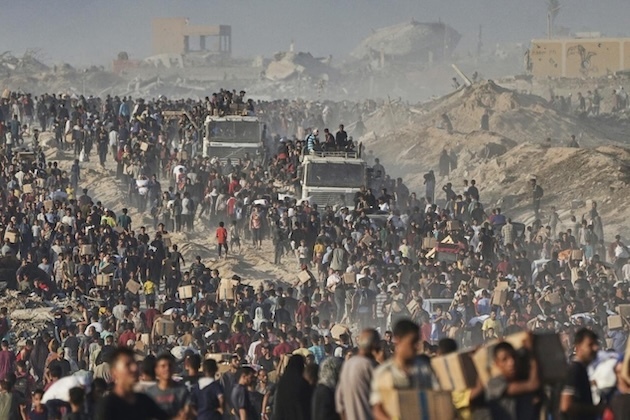
TEL AVIV, Israel - The Associated Press is reporting that Israel is in talks with South Sudan about relocating much of the Gazan population...
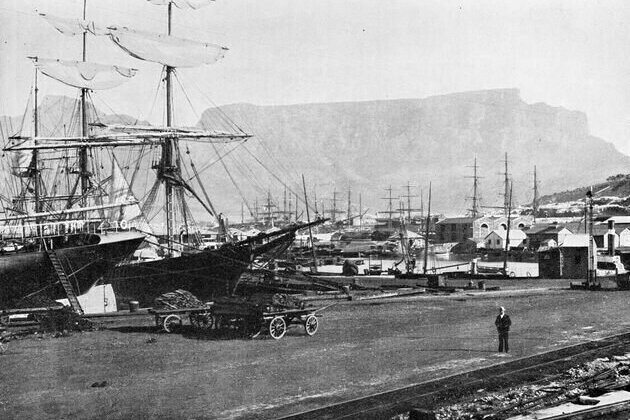
Share article Print article In a recently published book, Reconsidering the History of South African Journalism: The Ghost of the...
(250815) -- CHENGDU, Aug. 15, 2025 (Xinhua) -- Jin Zhao (L)/Yan Linlin of China act during the Boules Sports Mixed Petanque Classic...
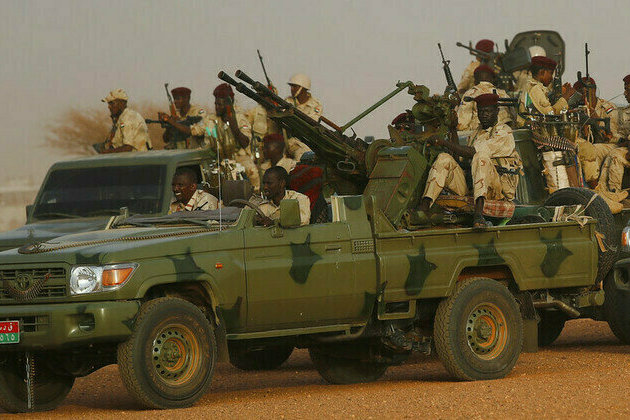
The move undermines sovereignty and risks escalating the conflict in the African state, the Security Council has said The UN Security...
Putin-Trump meeting recalls the stakes of German reunification It has been a long time since a diplomatic event drew as much global...
New Delhi [India], August 15 (ANI): India head coach Gautam Gambhir posted a heartfelt message while extending wishes on the country's...
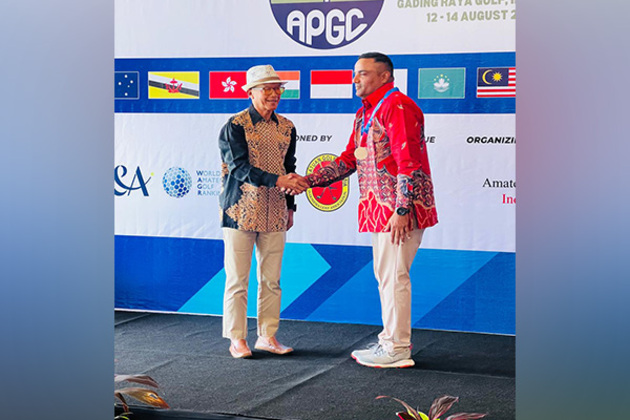
Tangerang [Indonesia], August 15 (ANI): Varoon Parmar, a Lieutenant Colonel in the Indian Army, fired rounds of 72, 68 and 76 (Even-par...