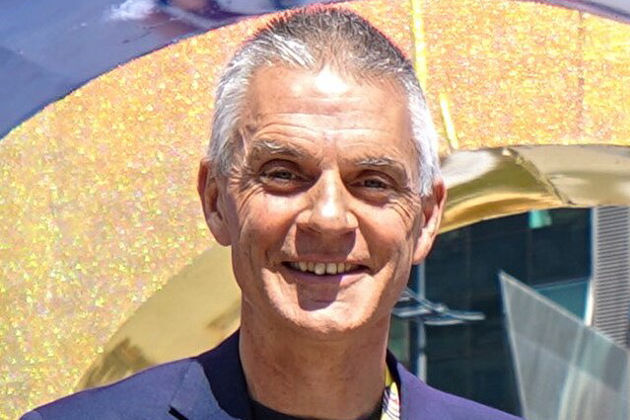
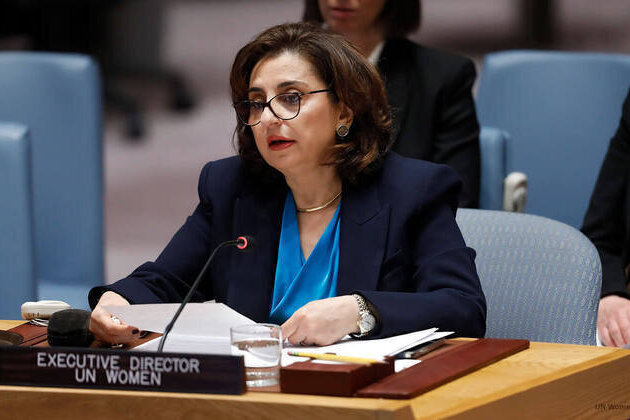
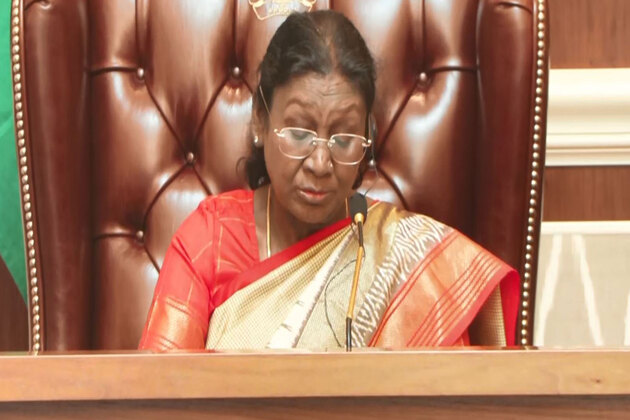
UN Women Executive Director Sima Bahous delivers remarks at the briefing of the Security Council on the reports of the Secretary-General on Sudan and South Sudan, on 11 November 2025, UN Headquarters. Photo: UN Women/Ryan Brown. As always in crisis and conflict, women and girls are hit hardest. Every day they face relentless climate challenges, food insecurity, sexual violence, abductions, and more.
South Sudan has one of the highest rates of gender-based violence in the region, with an estimated 2.7 million people at risk. 2024 saw UNMISS document 260 cases of conflict-related sexual violence, including rape, gang rape, sexual slavery, forced abortion, and forced marriage, with the highest number recorded in Western Equatoria State.
Forced displacement, especially of women and children, increases their vulnerabilities, while resource scarcity and livelihood pressures fuel ethnic tensions, driving intercommunal violence and increasing vulnerability to gender-based violence, particularly in border areas.
For South Sudan’s young people, the impacts are acutely gendered. Young women and girls face forced marriages and sexual violence. Young men and boys are enticed or forced to join armed groups as a means of survival.
Despite all this, despite a well-documented reality of fragility, it is now that the UN’s work in South Sudan becomes ever more pressured. It is now that mandates are questioned. Now that resources are withdrawn.
As Under-Secretary-General LaCroix will highlight, the UN’s work in South Sudan is more critical than ever. Displaced women and girls depend upon it for basic necessities such as shelter, food, and water.
Women and girls depend on the protection patrols or the GBV partnership of UN Women and UNFPA to support them. They depend on the United Nations, and UN Women in particular, to support their calls for a seat at the table, their mediation contributions, or for their voices and agency in peace processes.
In case all this seems abstract, I share with you just one example. A few months ago, a group of armed youth surrounded a girls’ boarding school in Warrap State. They sought revenge for a cattle raid. One hundred schoolgirls were trapped inside. They feared abduction or worse. They feared it with good reason.
Fortunately, UN peacekeepers intervened. They de-escalated the situation. They freed the girls. For those 100 girls, those peacekeepers could not have been more essential, nor their courage and skill more life changing. Those 100 girls would find it incomprehensible that the mandates and resources behind those peacekeepers might somehow be in question.
In this fragile environment, withdrawal of resources and capacity is imprudent at best, catastrophic at worst. And we know who will shoulder the inevitable burdens that come with disinvestment. It will be women: women who are first responders on the frontline, caregivers for their families, sustainers of their communities. All while facing a perfect storm of economic, climate, and conflict-related threats. They deserve better. We owe them better.
It has been seven years since the signing of the peace agreement. Those seven years have seen delayed elections; constitutional reforms that safeguard citizens’ rights, including gender equality, behind schedule; the unification of forces incomplete; and strong legal frameworks, social protection systems, and transitional justice unrealized. The same is true for progress on women’s leadership and role in peace and security.
It is regrettable that the second National Action Plan on Women, Peace and Security, developed over a year and a half ago, still awaits approval. The 35 per cent gender quota, which has so much potential to drive transformation for the better, is not yet a reality. Ceasefire monitors are overwhelmingly male. In the Nairobi peace talks, only 2 of the 18 delegates were women. All 10 governors are male, only 20 per cent of deputy governors are female, and women hold only 18 per cent of judicial positions.
I recognize that two Vice-Presidents are women, and that 40 per cent of the Political Parties Council is female. I hope that this proves to be a foundation for the quota to be extended also to the Cabinet, to the National and State Parliaments, the Council of States, the National Elections Commission, and the Constitutional Review Committee.
Women’s full and meaningful representation must be the norm in South Sudan, from community-reconciliation platforms to national and regional decision-making spaces.
At the grassroots levels, women forge local peace agreements between communities from different ethnic groups, resolve land conflicts or grazing conflicts between farmers and herders, intervene to stop cattle raids, and collect small weapons from young men and boys.
That is why I urge all parties to ensure that the 35 per cent agreed quota is met immediately, including for upcoming appointments to the Commission for Truth, Reconciliation and Healing and the Compensation and Reparation Authority.
There is, simply, no more proven pathway to sustainable peace than women’s leadership and meaningful inclusion in conflict resolution.
I call on the Security Council to maintain support for the UN in South Sudan, including its work on gender equality. I also call on the Security Council’s resolutions and negotiations on budget to maintain that same gendered lens.
Cuts in funding have already been devastating for women and girls, shutting down health clinics, nutrition treatment sites, and safe houses. They have jeopardized the crucial work of women’s organizations working on peace and social cohesion. There could be no worse time to withdraw such support.
However difficult the circumstances, UN Women will continue to work alongside all its partners—the African Union, IGAD, UNMISS, and more—to advance peace, justice, and stability. We do so because we are all united in the belief that the women and men, boys and girls of South Sudan must wait no longer.
I join with our partners in calling on all parties to ensure that international humanitarian law and international human rights law be upheld and respected.
And I remind us all that, throughout conflict and the building of peace, the women of South Sudan have been as resolute as they have been inspirational. They have shown leadership, courage, and conviction. They have advanced the Women, Peace and Security agenda with unwavering resolve.
Their advocacy, their work at the grassroots, and more have never mattered more. They model for us what can be done; they show us what happens when women lead.
And if our truest ambitions for South Sudan are that it be peaceful and prosperous, then there can be no higher priority for our support than women.
I thank you.



 Share
Share
 Tweet
Tweet
 Share
Share
 Flip
Flip
 Email
Email