ANI
18 Mar 2026, 21:30 GMT+10
By Sabita Mishra
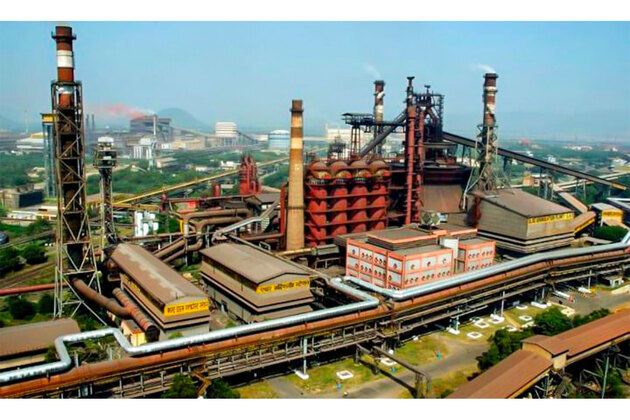
New Delhi [India], March 18 (ANI): The global urea market is facing a potential crisis as Qatar's urea plants have remained offline since early March, compounded by Iranian gas cutoffs and force majeure declarations across Gulf exporters.
Industry experts warn that the lack of diversification in the global urea supply chain has created a single chokepoint vulnerability, making it susceptible to disruptions.
Earlier in March, QatarEnergy announced that it is stopping the production of some downstream products in the country, including urea, polymers, methanol, aluminum and other products amid the ongoing conflict in the Middle East.
Chris Vlachopoulos, senior editor for fertilisers and Julia Meehan, managing editor for fertilisers and urea specialist at ICIS, say that most urea producers outside the Gulf are unlikely to shut down despite higher gas costs.
ICIS, Independent Commodity Intelligence Services, provides independent commodity intelligence, combining data, market insight and analytics to give a trusted view of global markets. ICIS leverages global expertise and advanced analytics to deliver connected intelligence across supply chains.
While speaking to ANI, Vlachopoulos and Meehan said, 'Most urea producers outside the Gulf are unlikely to shut down despite higher gas costs. Current price levels strongly incentivise production, meaning the more likely outcomes are high operating rates, deferred maintenance and tighter availability rather than widespread closures.'
They warn that the global urea market is facing a significant challenge due to its concentration in gas-rich regions, making it vulnerable to geopolitical disruptions.
They stated that the lack of diversification in the global urea supply chain is a structural issue, with production having concentrated in low-cost regions such as the Gulf, North Africa, and Russia over the past two decades. This has reduced costs but created a chokepoint when disruptions occur. High-cost producers in Europe and parts of East Asia have struggled to compete, particularly amid environmental policies such as the Carbon Border Adjustment Mechanism (CBAM).
'The lack of diversification is structural. Over the past two decades, global urea capacity has concentrated in gas-rich, low-cost regions such as the Gulf, North Africa and Russia. That reduced costs but created a chokepoint when geopolitical or security disruptions occur. High-cost producers in Europe and parts of East Asia have struggled to compete, particularly amid environmental policies such as CBAM,' they added.
Vlachopoulos warn that the global fertiliser market is facing a rising risk of regional shortages due to disruptions in the Strait of Hormuz, a vital shipping route. Slower transit through the strait is lengthening delivery times and reducing product availability, with inventories and alternative supply routes offering limited flexibility.
'A global shortage is not imminent, but the risk of regional shortages is rising. Slower transit through the Strait of Hormuz lengthens delivery times and reduces product availability. Inventories and alternative supply routes can cushion the impact in the short term, but flexibility is limited. While India has moved quickly to reassure farmers on fertiliser stocks, no country would be immune if disruption persists for weeks or months,' he said.
He adds that the key tipping points would be prolonged or repeated outages at major export hubs such as Qatar or Iran, combined with continued shipping disruptions.
'If those carry on for weeks, and coincide with seasonal demand peaks, the market could quickly tip from tightness into lengthy supply gaps, especially east of Suez,' he warned.
Persistent tensions in West Asia are undermining global food security, primarily through logistics and affordability issues rather than absolute shortages, says Vlachopoulos.
'Higher fertiliser prices, longer lead times and tighter credit conditions disproportionately affect price-sensitive importers in sub-Saharan Africa and parts of Southeast Asia (Bangladesh, for example),' he stated.
A sustained 15-30% rise in DAP and complex fertiliser prices can force farmers to reduce application rates or delay purchases, directly impacting yields.
This could lead to a vicious cycle of higher food prices, reduced crop yields, and increased reliance on government support or humanitarian aid, particularly in regions with limited financial resources. The impact will be felt most in vulnerable countries, exacerbating food insecurity and economic hardship.
He said, 'A sustained 15-30% rise in DAP and complex fertiliser prices can force farmers to reduce application rates or delay purchases altogether, directly impacting yields. Over time, this feeds into higher food prices and reliance on government support or humanitarian aid, particularly in regions with limited financial support.'
The Middle East conflict has choked fertiliser supplies from a major production and export hub, causing prices to skyrocket globally. That includes China, where spot prices of urea, the most widely used nitrogen fertiliser, have jumped nearly 40% since the US-Israeli attacks in Iran began, Green Markets data shows, according to Bloomberg. (ANI)
Get a daily dose of Nigeria Sun news through our daily email, its complimentary and keeps you fully up to date with world and business news as well.
Publish news of your business, community or sports group, personnel appointments, major event and more by submitting a news release to Nigeria Sun.
More InformationKATHMANDU, Nepal: Seven Indian pilgrims were killed and nine others injured when a bus they were traveling in skidded off a mountain...
CHICAGO, Illinois: Severe weather has swept across much of the U.S., dumping heavy snow and making roads impossible to travel on in...
Israel has escalated its attacks on Iran, Lebanon, Gaza and th West Bank overnight after announcing Tuesday the assassination of Iran's...
LONDON, U.K.: British teenagers say social media plays a complex role in their lives, even as the government considers whether to follow...
LONDON, U.K.: The war in the Middle East is forcing pharmaceutical companies to reroute shipments of critical medicines to the region,...
LAS VEGAS, Nevada: The sentencing of Dances With Wolves actor Nathan Chasing Horse, convicted of sexually assaulting Indigenous women...
By Sabita Mishra New Delhi [India], March 18 (ANI): The global urea market is facing a potential crisis as Qatar's urea plants have...
The Confederation of African Football rules Senegals win invalid after a disciplinary review and beaten opponent Moroccos appeal ...
Etienne Davignon took part in war crimes, including the humiliating and degrading treatment of the anti-colonial leader, prosecutors...
(260318) -- LUSAKA, March 18, 2026 (Xinhua) -- A Chinese doctor and a local medical worker interact with patients waiting for examination...
Officials from the South West state have announced a split with Mogadishu over interference in local affairs The South West state...
Denis Sassou Nguesso, who has been in power for more than four decades, secured 94.82% of the vote in the Central African nation ...